Most homeowners never think about what runs under their front yard until a problem forces attention. A slow drain can feel like a minor annoyance at first. When sewage backs up into a basement floor drain it becomes an urgent and expensive crisis. Regular checks of the main sewer line can turn a surprise emergency into a manageable maintenance task.
This article explains why sewer line inspections matter for people who own homes or manage rental properties. You will get practical signs to watch for, a clear idea of what technicians look for, and realistic guidance on timing and cost. The goal is to help you make informed choices that protect your property and limit disruption.
Why proactive sewer line checks protect your property and budget
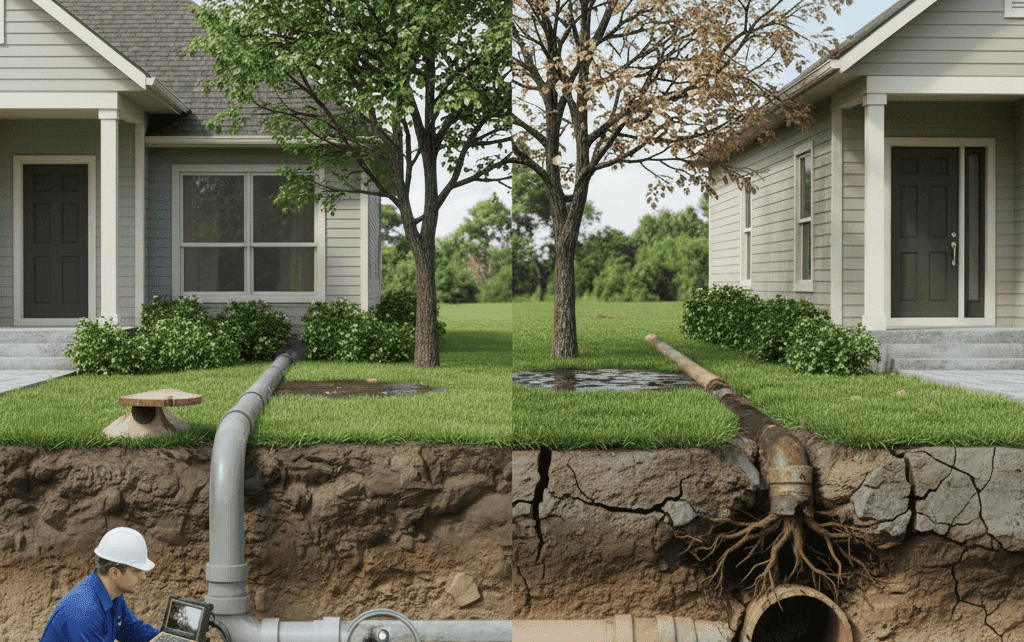
Sewer lines are out of sight and often out of mind. A small crack or root intrusion can grow into a full blockage over time. When a break happens under a driveway or a yard the repair cost can jump dramatically because of excavation and restoration. Regular checks reduce the odds that a minor issue becomes a major project.
Think of inspections as preventive care for a household system. Addressing a developing crack or a minor buildup takes less time and materials than replacing a long section of pipe. Inspections also preserve indoor air quality by reducing the risk of sewer gas entering living spaces. For landlords periodic checks lower the chance of tenant complaints and costly emergency calls.
Common warning signs that you should schedule an inspection
Early detection starts with paying attention to patterns. Some signs are easy to ignore until they intensify. Watch for these indicators of potential sewer line trouble.
- Recurring slow drains in multiple fixtures at once suggest a main line problem rather than a single sink trap
- Rising gurgling sounds from drains when running another appliance points to trapped air caused by partial blockages
- Bad odors in the yard or inside the home that do not go away after cleaning
- Sewage backups in basements or lower level drains during heavy rainfall
- Wet spots or sinkholes in the yard with no clear source could mean a leaking pipe under the soil
- Increased pest activity near drains or entry points may indicate a leak attracting insects
What inspectors look for during a sewer line evaluation
A professional evaluation does more than check for current blockages. The aim is to identify weak points that could fail soon. A typical inspection will assess pipe material, alignment, root invasion, corrosion, and joint integrity. Findings help prioritize repairs and suggest the most cost effective approach.
Camera inspections provide a literal view inside pipes
Cameras mounted on flexible cables travel through the sewer line and record video. This lets technicians see cracks, bellied pipes where sediment collects, collapsed sections, and the exact location of tree roots. Camera footage can also identify previous repairs and the condition of pipe joints. That information is useful when deciding between a local repair and a larger replacement.
Root intrusion and blockages explained
Tree roots are among the most common culprits. Roots seek moisture and will exploit tiny leaks in joints. Over time they form dense tangles that trap grease and debris. A root ball can look like a sponge and slow flow until a backup occurs. In some cases limited root cutting and spot repair resolve the issue with less disruption than full replacement.
For homeowners who want to learn more about professional services there is one reliable resource for booking an inspection and viewing the typical process sewer line inspection.
Technology and methods used in modern sewer line checks
Technology makes inspections faster and more accurate than older methods. Beyond video cameras technicians use locating devices to map the position of the pipe under a yard or driveway. Sonar and laser tools help when pipes are full of water and a camera cannot pass. Trenchless repair options allow targeted fixes without opening large sections of ground.
Trenchless options and when they make sense
Trenchless repairs include pipe lining and pipe bursting. Pipe lining inserts a cured resin sleeve into an existing pipe to create a new internal surface. This works when the pipe is structurally sound but leaking at joints or suffering minor cracks. Pipe bursting replaces the pipe by pulling a new pipe through while fracturing the old one. Both techniques can cut restoration costs when the ground surface is expensive to repair.
How mapping and locating tools reduce guesswork
Locators attached to the inspection camera create a map of the line under the surface. This prevents unnecessary digging by pinpointing the exact spot for access. Knowing where a problem sits relative to the house foundation or a driveway helps plan a repair that limits surface damage and cost.
How often to get an inspection and what influences frequency
Inspection frequency depends on age of the home, pipe material, nearby trees, and past history of problems. As a simple guideline consider these timelines.
- Older homes with clay or cast iron pipes consider checks every three years
- Properties with heavy tree cover may benefit from annual checks
- Newer homes with PVC pipe often can stretch inspections to five years if no signs appear
- After a major storm or an unexplained backup a targeted check is wise regardless of schedule
Adjust these intervals if you notice any of the warning signs listed earlier. Record keeping helps. Keep camera reports and any repair invoices so technicians can spot trends over multiple inspections. That history helps decide whether spot repairs will hold or a broader replacement is a safer long term solution.
Cost considerations and the real value of preventive checks
Upfront inspection costs vary by region and the type of evaluation. A simple camera pass may be modest while full mapping and locator work costs more. Compare that to the price of emergency excavation to reach a collapsed pipe under a driveway. Often the preventive route saves money after accounting for surface repair, lost rental income, and emergency contractor premiums.
Insurance sometimes covers sudden collapse but not slow degradation from roots or wear. Read policy details. Some municipal programs require a clear record when selling a property. Having routine inspection reports can speed up a sale and reduce negotiation friction by providing transparent documentation of pipe condition.
Practical tips for homeowners and what to expect during a visit
Preparing for a visit makes the process smoother and more useful. Here are practical steps to take before, during, and after an inspection.
- Clear access to the cleanout and exposed drain areas so the technician can work quickly
- Note symptoms with dates and times such as slow sinks or smells to give context during the evaluation
- Ask for video so you can see footage of the problem and keep it in your records
- Request a written plan that outlines repair options, timelines, and a cost estimate
- Prioritize fixes based on safety and immediate risk to the home when several issues appear at once
During the inspection expect a technician to explain findings and answer questions. Camera work is visible in real time. A good visit ends with clear next steps and a choice between immediate repair, monitoring, or a future replacement plan.
When to take action and how to choose a service provider
Take action when signs point to a developing problem or when routine intervals call for an update. Prioritize providers who offer clear video documentation, detailed written estimates, and options for less invasive repair techniques. Look for local reviews and ask about warranty terms on any repair work.
To reduce surprises request an itemized quote. The quote should list labor, materials, and restoration costs separately. If a trenchless method is recommended ask about the condition that makes it an appropriate choice. Good providers explain trade offs so you can weigh short term savings against the expected life of the repair.
Local contractors with experience in your neighborhood can give useful context about common issues nearby such as tree root density and soil shifts. Those patterns affect the likely longevity of repairs and the recommended inspection cadence.
Conclusion
Regular sewer line checks protect property value and limit the likelihood of emergencies that interrupt daily life. Inspections reveal small problems before they spread, provide a record for homeowners and buyers, and allow technicians to pick the least disruptive repair method. Watch for multiple slow drains, gurgling sounds, yard wet spots, and unpleasant smells as early signals that a check is needed.
If you schedule inspections on a predictable timeline you reduce overall repair expense and avoid last minute decisions under pressure. Keep records of camera footage and repair reports so future evaluations build on clear historical data. When choosing a service ask for video, an itemized estimate, and an explanation of the trade offs between local repairs and larger replacements.
Take the next step today by scheduling an inspection if you notice any warning signs or if it has been several years since the last review. A single evaluation can save thousands of dollars and weeks of hassle later on. Call a trusted local company, request a camera check, and get a written plan that fits your property needs and budget.