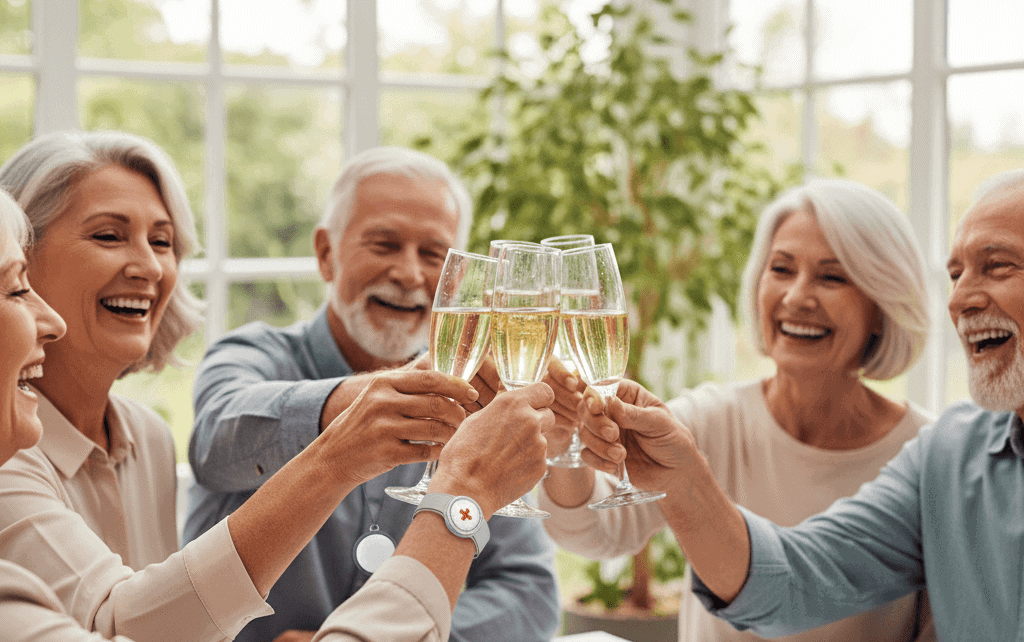
Raising a glass to celebrate birthdays, anniversaries, or just good times brings joy for everyone. Older guests can face hidden risks during toasts that families and hosts often miss. Thoughtful planning and smart tools make these special moments safe while keeping all the fun and warmth alive. This helps people enjoy celebrations without worries, making every toast worth remembering. Keep reading to discover how to make your gatherings safer and more enjoyable for all ages.
This article looks at why medical alerts belong at the toast and how they keep seniors included without making the event feel clinical. You will find practical examples, straightforward tips for hosts, and clear guidance on selecting devices that work well in mixed company.
Medical Alerts Make Every Toast Safe For Seniors Learn Why
Seniors who wear medical alert devices often have a way to call for help the moment they need it. During social situations a sudden dizzy spell or fall can happen when no one is looking. A medical alert gives immediate access to help through a simple button or fall detection feature. That link between a quick response and faster care is why many families choose to have an alert worn at parties.
Consider a loved one who stands to propose a toast then feels lightheaded. Without an alert they may attempt to sit or call out. With an alert there is a clear path to help while bystanders continue the celebration. That quick connection reduces the chance that a small incident turns into something much more serious.
Common medical risks during social drinks with older guests
Understanding the typical medical issues that can arise during a gathering helps hosts plan ahead. Several specific risks deserve attention.
Medication and alcohol interactions
Many older adults take prescription drugs that can interact with alcohol. Sedatives and some blood pressure medications increase drowsiness when combined with alcohol. Even a modest amount of alcohol can worsen balance and reaction time when combined with those drugs. A host who knows the basics can offer alternatives such as sparkling water or nonalcoholic options and can place drinks where they are easy to reach to cut down on unnecessary movement.
Balance issues fainting and cardiac events
Balance problems are a leading cause of falls among seniors. Heart rhythm problems can start without warning. A fall during a toast can be caused by a slip a dizzy spell or an interaction between a medication and alcohol. Quick medical attention reduces the risk of serious injury after a fall. Medical alerts bring help to the scene faster through direct contact with monitoring centers or emergency services.
How medical alert devices work in a party setting
Medical alert systems vary yet most share a few clear functions that make them suitable for social events. The core idea is rapid access to help when something goes wrong.
- Push button response that connects to a live operator
- Two way voice so the user can speak with support without leaving the room
- Fall detection that triggers a call when a hard fall is sensed
- Portable models that work outside the home for celebrations at restaurants and venues
In practice a wearable device could notify a monitoring service the moment it detects a fall. The user can speak through the device if they are able. If not the operator sends emergency services with location information when applicable. That flow shortens the time between incident and care when seconds matter.
Choosing the right alert for social settings
Selection depends on lifestyle and event type. A system that is ideal for a quiet meal might not work for a crowded reception. Here are factors to weigh when picking a device that will be used during gatherings.
Wearable styles that suit a night out
Many seniors prefer discreet options such as pendants or wristbands. These look like jewelry so they blend into party attire. For people who move around a lot or who attend events outside the home a cellular model that does not rely on a home base unit is important. Battery life and waterproof ratings matter for outdoor receptions where a spill or light rain could occur. Choosing a model with clear indicator lights and an unobtrusive form factor encourages consistent use during social events.
Features to match guest needs
Some seniors value the simplicity of a single large button. Others need fall detection because balance is a concern. If cognitive loss is present a device with GPS may be helpful for wandering risk. Always check how the device signals help and whether the monitoring center follows a clear protocol for dispatch. Short response times and two way voice are especially useful when an incident happens in a noisy room.
Practical tips for hosts and family members
Hosts who plan ahead can keep spirits high while reducing risk. Small adjustments make a big difference in safety and guest comfort.
- Ask about drink preferences and medications in a gentle way before the event so hosts can prepare suitable beverage choices
- Seat older guests near exits or near someone who can respond quickly in case of an incident
- Keep pathways clear and remove rugs or cords that could trip a foot
- Make ice and water easily accessible to limit trips to the kitchen
- Place coasters and napkins to signal where drinks belong and reduce spills
- If a guest uses a mobility aid allow space for it to be positioned safely by their chair
It helps to make the presence of a medical alert a positive part of the plan. A host might say the device is there to keep everyone safe and to make sure celebrations continue with minimal interruption. For guidance on pairing safety and celebration language look at a practical example at Glass of Bubbly which offers tips on keeping toasts joyful and safe.
Real life examples where alerts made a difference
Cases reported by families show how subtle the advantage of an alert can be. One example involves an older man who stood to clink glasses at a large family reunion. He felt dizzy and hit the floor. Because he wore a pendant with fall detection emergency services arrived quickly. Tests showed a cardiac issue that required attention. The family credits the device with speeding care and limiting harm.
In another instance a woman attending a wedding at an outdoor venue felt faint after standing for the bridal march. Her wristband alerted a monitoring center. The operator checked in with two way voice and arranged for venue medical staff to examine her. A combination of timely hydration and a brief rest prevented hospitalization. Both examples show how help can arrive with minimal drama so celebrations continue.
Myths and realities about alerts at celebrations
There are common misconceptions that keep some people from using medical alerts during parties. Addressing those myths helps families make clear choices.
- Myth one is that a medical alert will interrupt a celebration with unnecessary calls. Reality is that most monitoring centers follow a verification process before dispatching emergency services
- Myth two is that wearing an alert looks medical and ruins style. Reality is that modern devices come in designs that fit formal wear and casual outfits
- Myth three is that alerts are only for home use. Reality is that mobile units work in public places and at rented venues
Sharing these realities with guests helps normalize wearing an alert during social moments and reduces stigma that might otherwise silence a useful tool.
Benefits for seniors and hosts when alerts are present
Having an alert at a toast helps the senior and the host in measurable ways. For the senior it offers a reliable way to request help without needing to shout or move. For hosts the device reduces decision pressure because a professional service can triage medical calls. This arrangement keeps the event moving while care arrives if needed.
Another practical advantage is the record keeping some services provide. After an incident a monitoring desk will often note the time actions taken and the response. That record can be useful when families follow up with clinicians. Choosing a device that stores basic event information offers a small but meaningful benefit in ongoing care management.
Selecting a medical alert device and planning for safe celebrations are small steps with a solid return. When families plan drinks and toasts with older guests in mind the mood remains festive and worry free. Start by talking to the person who will wear the device about comfort and preferences then pick a model that matches their routine. For hosts keep drink options flexible seat guests thoughtfully and remove trip hazards. If an incident occurs the presence of an alert shortens the time to help so the event can continue with fewer interruptions.
At the end of the day safety and celebration can go hand in hand. If you care for a senior or host gatherings bring the device into the conversation now. Check device settings and battery life before the event so there are no surprises. If you are unsure which features matter most compare models side by side and ask the provider about monitoring protocols and fall detection accuracy. A small investment in planning and the right device keeps toasts joyful and reduces the chance of a minor problem becoming a major one. Reach out to a provider or a clinician to test options and pick a plan that fits seasonal or ongoing needs. Taking this step helps protect memories and keeps the focus where it should be on family and friends.